
Four Generations, One Cutting Table
Master Hu is a fourth-generation tailor. Every garment that leaves our Shenzhen atelier carries the same sequence of decisions: fabric first, then proportion, then the hand-finishing that gives a garment its fall.
See the Process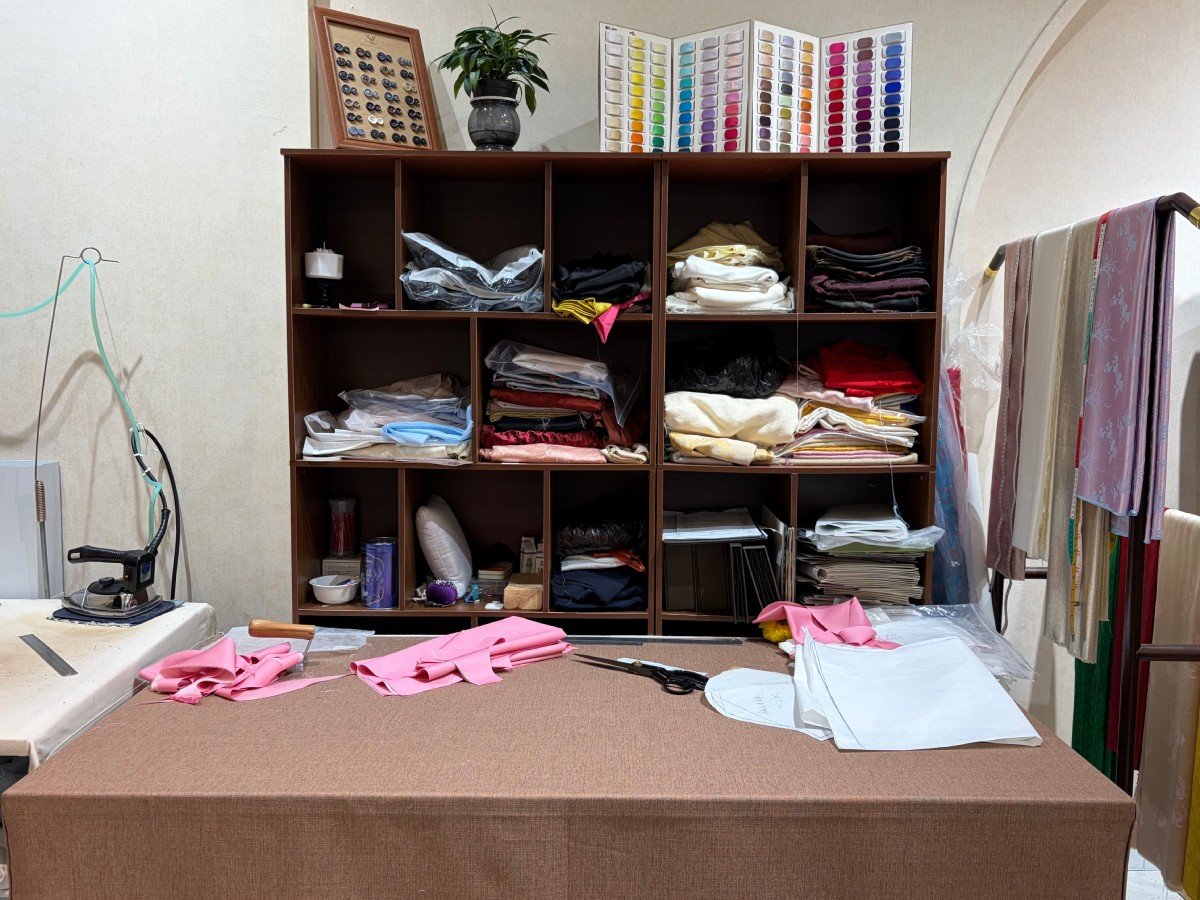
Why hand finishing still matters
A machine can close a seam. It cannot decide where a collar should sit, how a lapel should roll, or how much ease a silk needs to fall cleanly. Those decisions are made by hand, and they are what separates a garment that fits from one that only looks like it should.
Our atelier works the traditional way: patterns drafted by hand, cloth cut with attention to grain and motif placement, and finishing done by hand — piping, pankou frog closures, hems and pressing.
What we hold to
Fabric First
Authentic Chinese mulberry silk, heavy silk brocade and fine wools — chosen for how they behave, not just how they look.
Proportion
Patterns drafted and adjusted by hand, so the garment follows the body rather than a generic size block.
Hand Finishing
Piping, closures, hems and pressing done by hand in our Shenzhen atelier.
One Standard
The same team and the same discipline behind qipao and tailoring alike.